Measurement
Part of Podcast media reporting
Explaining measurement uncertainty in a podcast report
Qualify podcast delivery, estimated reach, code sales and study findings beside each result, with clear effects on campaign decisions.
Place a limitation beside the result it changes, and state what decision that result can still support. A general disclaimer at the end leaves readers guessing. For each headline figure, identify what was counted or estimated, its inventory and period, and what it cannot establish.
Give the figure a clear boundary
For publisher delivery, state the reported event, dates, inventory and any Australian geographic rule. Describe the event the publisher actually counts. A delivery count does not establish a person's attention or recall. Use the publisher's actual method when describing its figure.
For estimated unique recipients, state the provider's identity method, coverage and time frame. Changing or shared signals can distort the estimate. Do not present it as an exact count of Australians who listened. If some shows or platforms are outside the estimate, say so beside the total.
For response, name the advertiser system and the route it observes. Accepted-code orders exclude purchases without the code and may include shared-code use. A dedicated-page visit may come from a shared link. The action record alone cannot settle the person's earlier exposure.
Write a useful uncertainty note
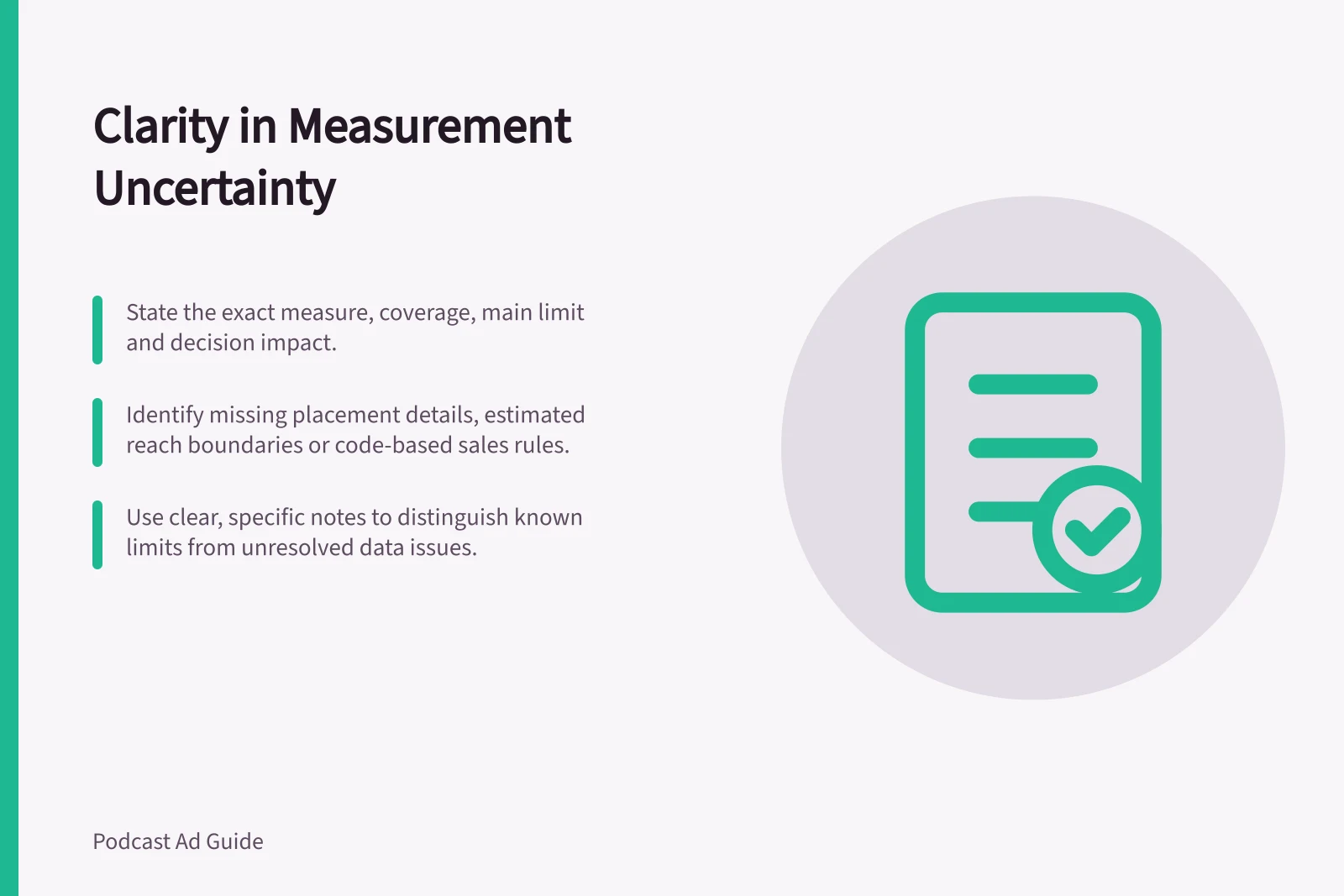
A compact note states the measure, coverage, main limit and effect on the decision. For example: The publisher reported eligible Australian ad deliveries for the listed shows and flight. The count supports a check against the booked delivery unit; it does not confirm playback or count everyone who heard the message. This is sample wording, not a campaign finding.
Name the specific issue instead of saying only that results may vary. An unmatched creative ID, an incomplete episode report, a code used elsewhere and a study covering only one platform each call for a different qualification or follow-up.
| Issue | Clear report statement | Decision affected |
|---|---|---|
| Missing placement detail | The campaign total was reported, but this named placement is unverified. | Hold sign-off for that placement. |
| Estimated unique reach | The figure follows the provider's identity method and covered inventory. | Avoid an exact-people claim. |
| Code-based sales | These orders used the stated code under the sales rules. | Avoid a claim of all sales caused by the ad. |
| Limited study coverage | The estimate applies to the studied population and inventory. | Avoid extending it to the whole buy. |
Key Elements of a Useful Uncertainty Note
- Measure
- Publisher-reported eligible Australian ad deliveries
- Coverage
- Listed shows and flight period
- Main Limit
- Does not confirm playback or count everyone who heard the message
- Effect on Decision
- Supports check against booked delivery unit only
Distinguish a known limit from a data problem
A method-dependent estimate can inform a decision when its boundary is clear. A missing or contradictory field needs investigation. Ask the data owner to resolve an unmatched date range, omitted creative or unexplained change before making it a headline. If it cannot be resolved by the reporting deadline, mark the affected conclusion provisional and identify the missing evidence.
Close with the decision the available evidence supports and the one that remains open. That lets the advertiser act on verified delivery or recorded response without giving uncertain figures false precision.