Measurement
Part of Podcast media reporting
Reconciling booked episodes with delivered ad impressions
Check named podcast placements and ad-delivery commitments against the order, publisher report, creative evidence and approved changes.
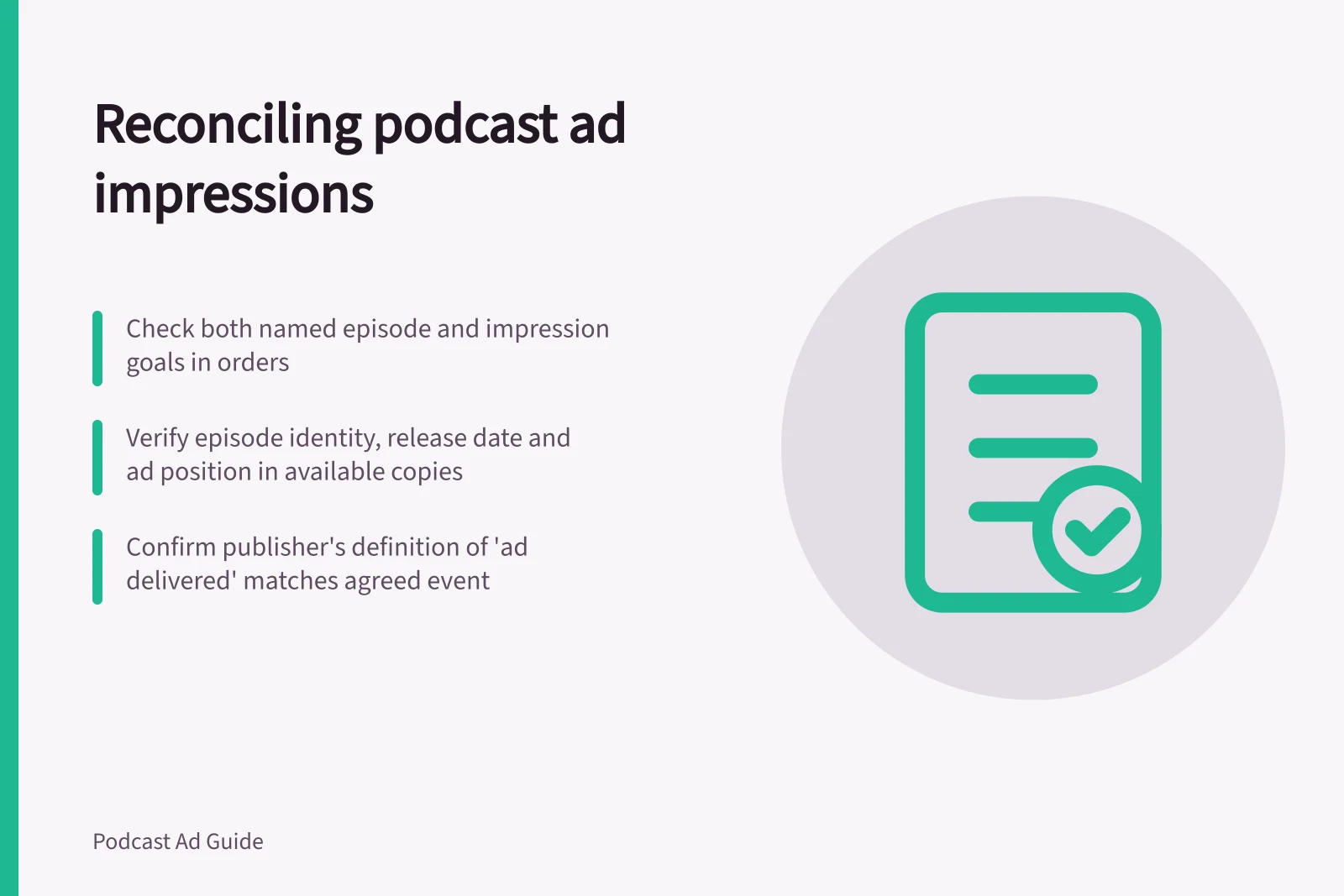
Reconcile each unit promised in a podcast order. A named episode can be released without proving that a committed number of ad impressions was delivered. An impression goal can be met while a named-episode obligation remains unresolved. Check both when the order includes both.
Build the line-item ledger
Copy the approved order into a ledger before adding publisher results. Each row carries the booked show, episode or eligible inventory group; release or flight dates; position; creative version; geographic rule, if any; priced unit; and committed quantity. When a replacement is proposed, keep the original obligation visible, with its approval and revised terms beside it.
Request reporting at a level that can verify the order. A campaign total cannot establish whether a particular named episode ran. If delivery is permitted across eligible episodes, obtain enough show or episode detail to check the dates and exclusions that were agreed.
Match evidence to the promise
| Booked promise | Evidence to request | Remaining limit |
|---|---|---|
| Ad in a named episode | Episode identity, release date, creative and location of the ad in an available copy | That copy does not establish total distribution. |
| Dynamic delivery in named episodes | Creative ID, episode-level delivery, eligible dates and the reported ad event | One sampled playback may differ from other requests. |
| Ad-delivery quantity | Final count, event definition, period, geography and eligible inventory | The reported event must match the agreed unit. |
For an ad embedded in an episode, compare an available released copy with the approved creative and position. For dynamic insertion, compare the creative ID and eligible deliveries against the order. Ask what creates a reported impression.
Definitions differ by publisher. Guidelines for podcast measurement address downloaded media and the ads included in those downloads, but they do not settle what your publisher counts: an ad delivered figure may rest on a valid download and delivery of the specified ad bytes rather than a confirmed listen, and a publisher may use another method. Confirm which definition applies and retain the publisher's actual definition.
Resolve differences before calculating a shortfall
First align the time zone, cut-off, episode identity, creative ID and any contracted Australian geographic rule. Then separate the issues: an episode did not release as booked; the episode released but the creative is unverified; eligible ad deliveries fell below a commitment; or final reporting for the agreed window is still pending.
Do not subtract an episode count from an impression count. Calculate an impression variance only when booked and delivered figures use the same event, inventory and period. For a named-episode obligation, record whether that placement ran under its terms. If the seller supplies episode downloads instead of ad deliveries, label them as downloads and ask for evidence of the booked ad event.
A replacement or extra delivery closes an exception only if it meets the agreement or the buyer approves a change. Record the decision against the original row.
Sign off each obligation
Mark every line accepted, pending evidence or disputed, with a reason and owner. Keep the order, approved changes, creative evidence, publisher report and invoice together. Sign off the obligations the evidence supports; send specific unresolved questions to the seller. Business outcomes can sit beside this media account in the campaign report; they are not part of its impression variance.