Measurement
Part of Podcast advertising brand suitability
Documenting suitability decisions for audio campaigns
Record podcast suitability evidence, approvals, uncertainty and later changes in a clear decision trail.
Record what the team knew, the suitability rule applied, who approved the placement and later changes. Another reviewer should understand the decision without relying on memory. Show where an episode or delivery could not be checked.
Record the unit actually reviewed
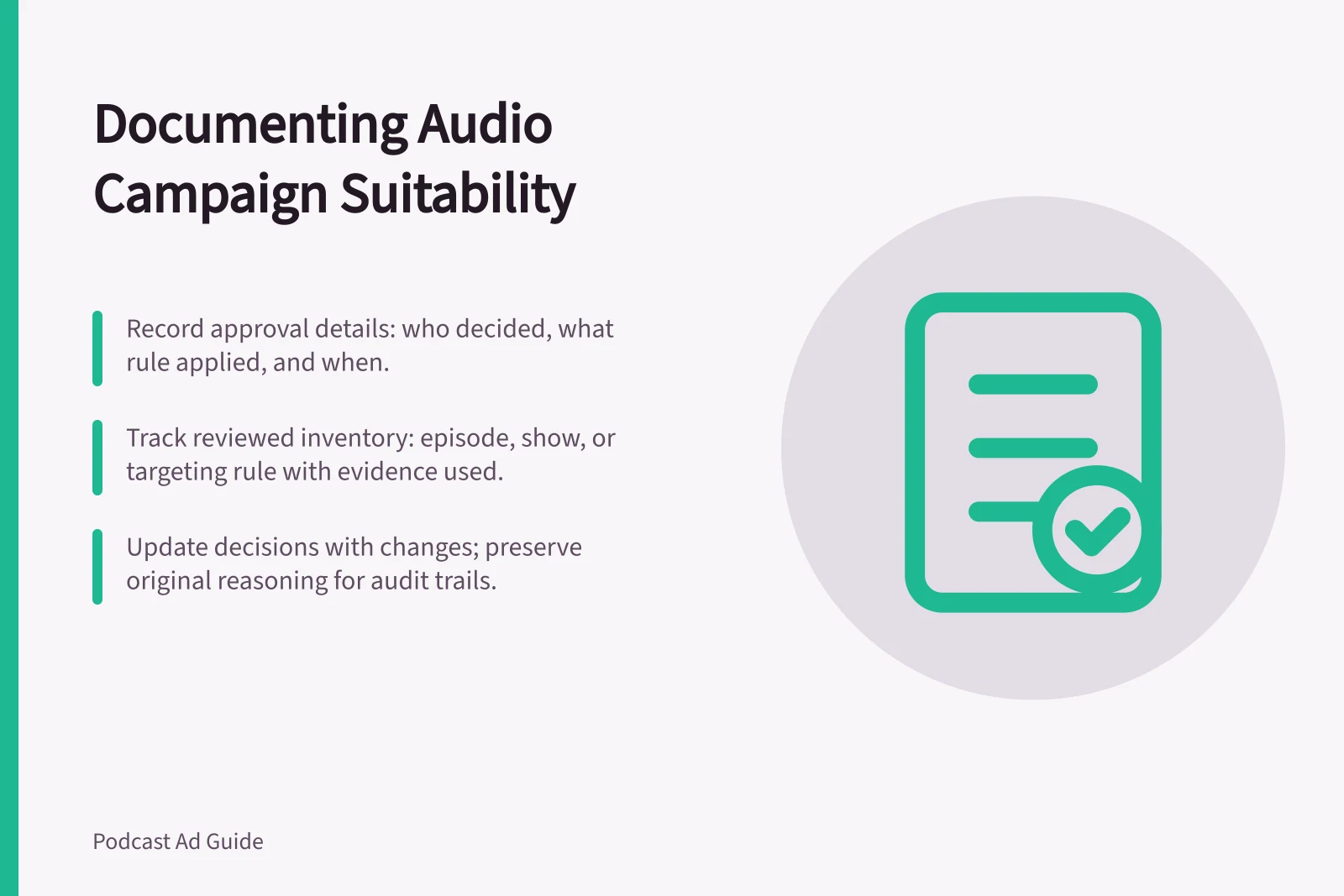
Identify whether the approval covered a named episode, show, defined catalogue pool or targeting rule. Add campaign, creative version, review date, reviewer’s role, evidence examined and decision. If the episode was forthcoming, mark the decision provisional; do not call unfinished audio cleared.
A compact decision row can include inventory, context evidence, observed theme, applicable exclusion, decision, condition or open question, approver and review date. Identify the audio, episode details or seller report used. Separate observation from judgement: “the opening discusses a fatal accident” describes content; “do not place this upbeat offer after that passage” records a suitability decision.
State what the evidence covers
If the team sampled a catalogue, list the episodes and dates reviewed. If it relied on seller classification, record the eligible pool, classification information supplied and any manual exceptions. A show category is a show-level signal, not evidence that every episode was heard. Ask which controls and reports apply to the actual booking; these vary by seller and buying route.
Keep delivery reporting separate from editorial approval. Record the seller’s delivery unit, period and covered inventory. Under a server-based method, an ad-delivered count is evidence of delivery under that method, not confirmation that a person listened. The approval explains why a setting was accepted; the delivery account shows where the creative was counted.
Podcast Campaign Review Metrics
- Seller classification used
- Yes – Show category: Health & Wellness
- Manual exceptions applied
- 2 episodes manually excluded
- Delivery method
- Server-based ad insertion
Add changes without overwriting the first decision
When a new episode, revised creative or exception changes an approval, add a dated entry linked to the earlier one. Note who requested the change, what new information was available, and whether future delivery was paused or a substitute approved. Preserve the original reason so a later reviewer can assess the decision on what was known then.
For a disputed placement, connect the incident entry to the agreed exclusion, episode evidence, publisher response and resolution. Mark estimates and unknowns. Use episode, creative and aggregate delivery evidence where it answers the question, without adding unnecessary personal listener information.
At campaign close, check approved inventory and exclusions against the order and that each exception has an outcome. The result is a decision trail, not a certificate that unsuitable adjacency was impossible.