Sponsorship Ops
Part of Podcast advertising brand suitability
Responding to an unexpected controversial episode
Verify an unexpected podcast ad context, limit future delivery where possible and resolve the placement against the booking.
If an ad appears in an unexpected or concerning episode, establish what ran and where. Alert the publisher and consider pausing future delivery while the context is reviewed.
Judge the response against the full episode, the agreed exclusions and the delivery method. An isolated clip or an impression count is not enough to describe the incident.
Establish the facts
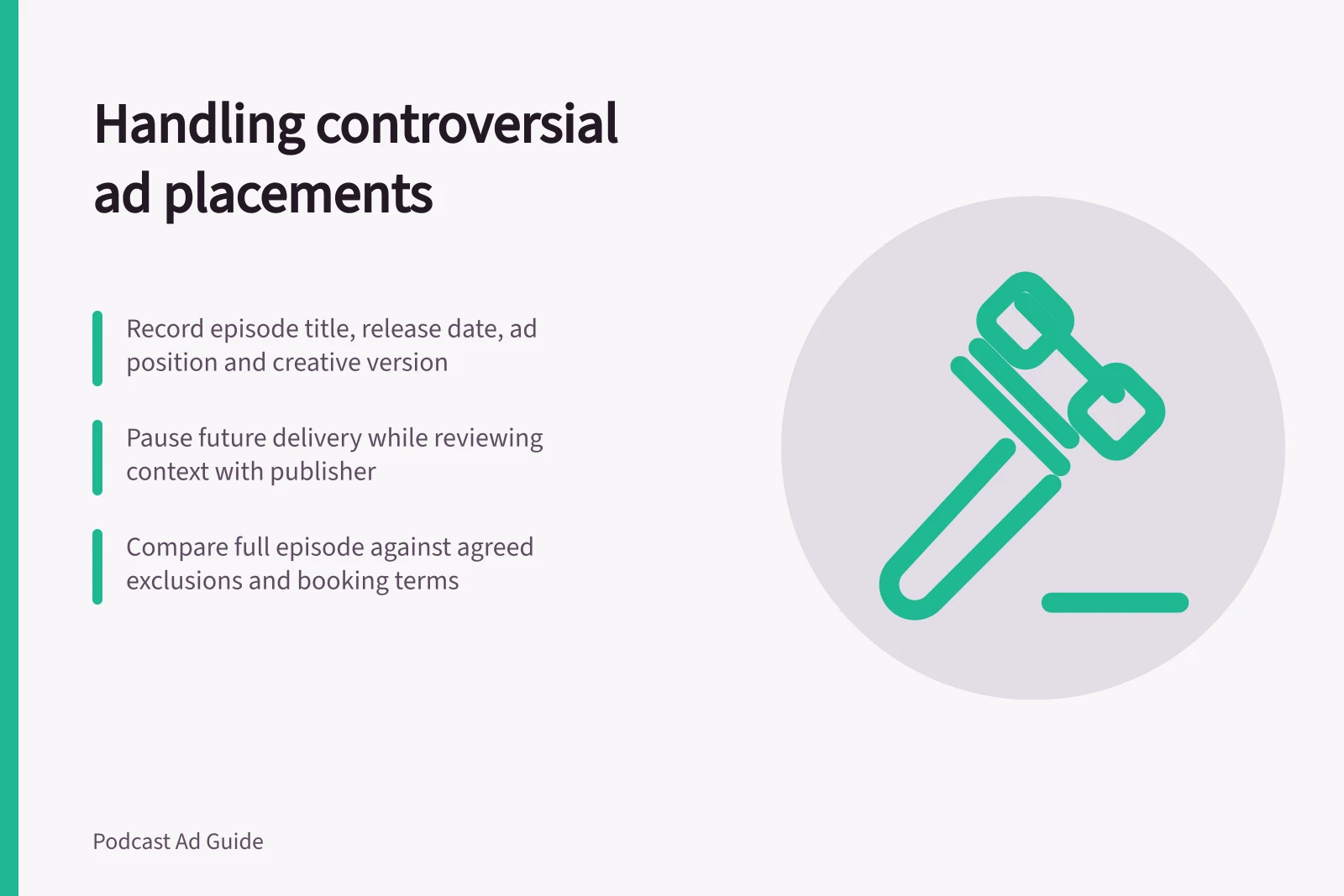
Record the episode title, release date, relevant passage, ad position and creative version. Listen to the discussion and the transition into and out of the ad. Identify whether the concern is the topic, its treatment, proximity to the ad or a problem with the ad itself.
Ask the publisher whether the creative was integrated into the episode or dynamically inserted, which inventory was affected and what its report counts.
A downloaded copy can show that the ad appeared in that copy; it cannot show every version served to other requests. Server-recorded ad delivery describes delivery under a stated method, not confirmed playback or attention.
Preserve the audio or available recording, the booking terms, relevant reports and the time the issue was raised. Do not infer how many people heard the ad from a circulating clip.
Limit further delivery where possible
Tell the publisher which placement is under review and ask whether it can pause future eligible delivery. Get confirmation of when any pause takes effect and what inventory it covers.
Dynamic insertion can change what is served on future requests, but the seller must confirm its actual controls. For an integrated ad, ask what can change for future downloads; copies already downloaded may remain outside the publisher's control.
A substitute episode or creative still needs to meet the agreed campaign requirements. If the concerning episode has yet to be released, hold the placement while the parties review the available information.
Dynamic insertion vs. integrated ad delivery
- Dynamic InsertionAd changes per request; seller must confirm actual controls; pause can affect future deliveries.
- Integrated AdFixed in episode; future downloads may remain unaffected; ask what can be changed for new versions.
Decide and communicate
Compare the full context with the written exclusion. If it breaches an agreed condition, request the remedy available under the booking and an account of reported delivery.
If the term is unclear, record both interpretations and agree a resolution without claiming the order said more than it did. The advertiser may also change future placements when a context feels wrong but falls outside the existing exclusion; record that as a new decision.
Refer any potentially misleading product claim or unclear sponsorship to the responsible advertising reviewer. The ACCC can require businesses to back up claims about their products or services, and the AANA Code of Ethics says advertising should be legal, honest and truthful. A complaint about the episode's context does not itself establish a breach of either standard.
If a public response is needed, state only what has been verified: the placement, action taken and any remaining uncertainty. Then update the suitability brief with the concrete circumstance the earlier rule missed.
Public response considerations
- ProsTransparency builds trust; only verified facts are shared; maintains compliance with ACCC and AANA standards.
- ConsOverstatement risks legal exposure; unverified claims may damage brand reputation; uncertainty should not be misrepresented.
Key regulatory references for podcast advertising
- ACCC AuthorityCan require businesses to substantiate product claims under Australian Consumer Law.
- AANA Code of EthicsAdvertising must be legal, honest, and truthful; applies to sponsorship and content integration.