Buying Inventory
Part of Podcast advertising brand suitability
Agreeing on adjacency exclusions in a podcast booking
Define podcast ad adjacency exclusions by theme, inventory and the control a seller can apply before booking.
An adjacency exclusion is useful when the booking identifies the unwanted content, the inventory it covers and the action the seller can take. Define the concern in terms a publisher can recognise. Confirm whether its controls work at show, episode or ad-break level before agreeing to the order.
Define the content and the boundary
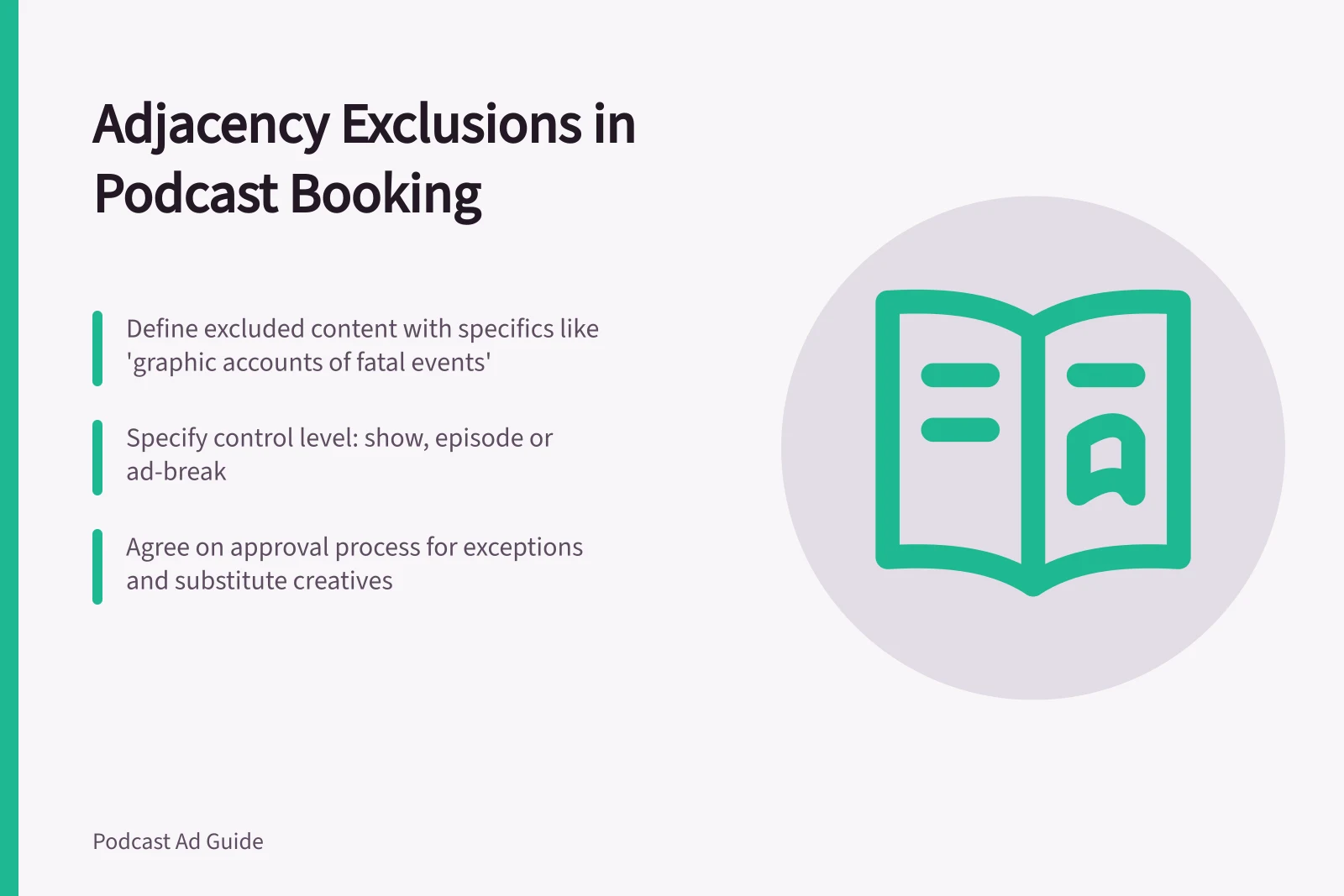
Start with the reason for the restriction. “No controversial content” leaves too much to interpretation. A useful instruction names both the subject and the treatment that creates the concern, such as a graphic account of a recent fatal event. State whether all discussion of the subject is excluded or whether a measured, educational discussion may qualify.
Define what “adjacent” means for this booking. It could mean anywhere in the same episode, within a segment containing the break, or immediately before or after the ad. These require different controls.
If the seller can filter only shows or whole episodes, record that limit. A show category is not a promise about the audio beside a break. Name who can approve an exception.
Match the term to the buying method
For a named episode, identify the release and proposed position. State whether approval depends on the finished audio, a preview or an agreed description, and what happens if the episode changes materially.
For dynamically inserted ads, define the eligible shows or episodes, excluded themes and review or classification method. Ask when new releases become eligible, whether older episodes are covered and what placement detail the seller can report.
Episode-level classification exists in some offerings, but its availability for the actual buy and its ability to enforce the proposed restriction need confirmation. An automated label does not guarantee that every context will match the buyer’s judgement.
Podcast Targeting & Measurement Standards in Australia
- IAB PTM Guidelines v2.3
- Published by IAB Tech Lab; supports standardised podcast measurement
- Acast Pre-Bid Targeting
- Enables episodic targeting for podcast ads; available via Acast platform
- Campaign Targeting Best Practice
- Guidance from Acast Learn; supports accurate audience and context targeting
Agree on decisions and remedies
A short order attachment can record:
- The excluded theme and the level at which the restriction applies.
- The inventory, creative and dates covered.
- Who decides a borderline case and when.
- Who can request a pause to future delivery during review.
- What placement evidence the seller will provide.
- Whether a substitute needs buyer approval and what makes it acceptable.
For illustration, a buyer might ask that a named creative be excluded from episodes principally discussing a specified event category, with written approval required for a substitute. The parties still need to define the category, control and remedy for their own booking.
Ask the seller to identify any restriction it cannot apply. Resolve the gap by changing the proposed inventory or term, or by declining the placement. Keep the agreed wording with the order so a later placement can be assessed against it.