Measurement
Part of Selecting podcast partners
Asking for audience data with clear measurement definitions
Request podcast audience figures with the unit, coverage, period, geography and method needed to compare partner proposals.
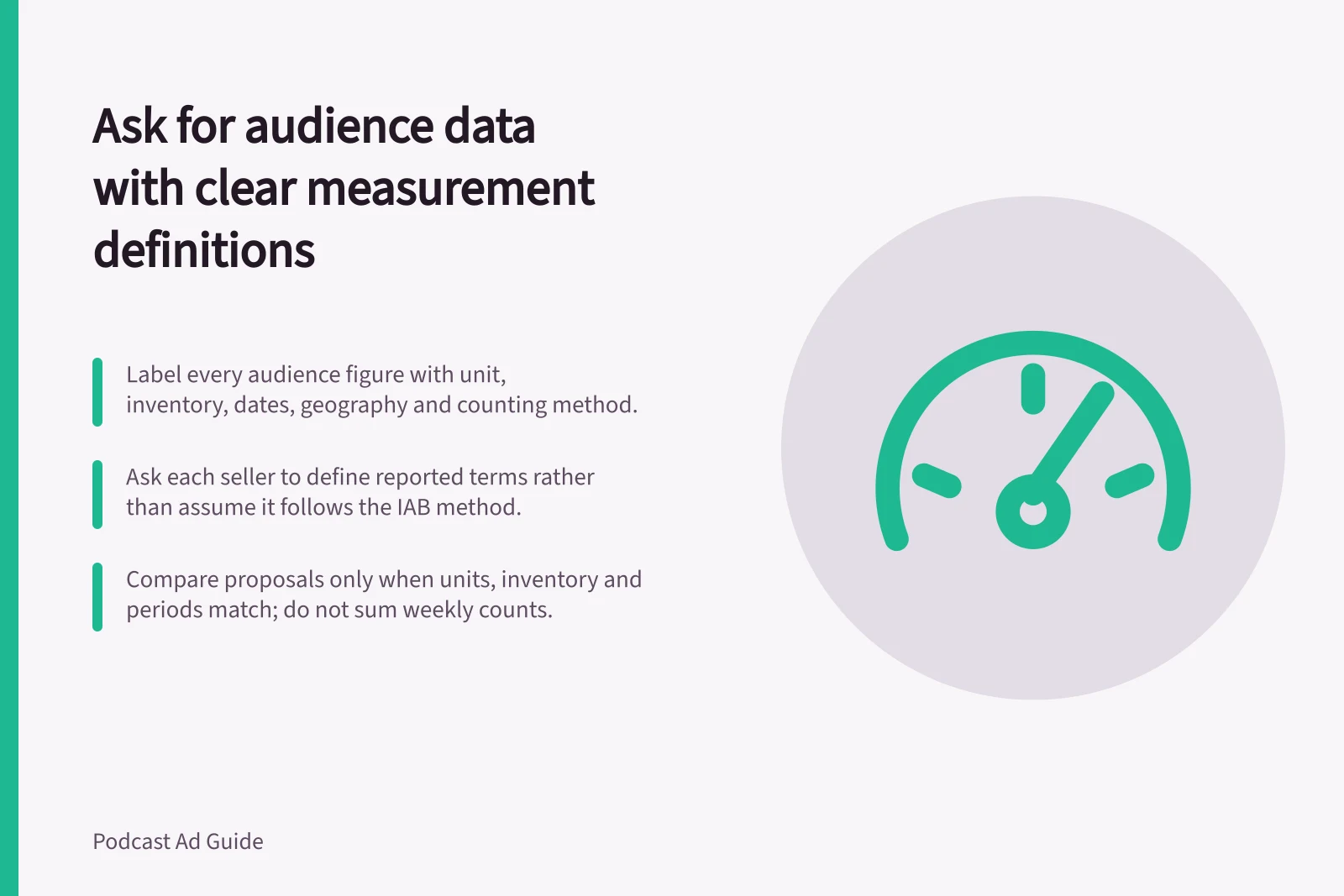
Ask a prospective podcast partner to label every audience figure with its unit, inventory, dates, geography and counting method. Without those details, a number may describe episode downloads, estimated consumers, one app's activity or ad deliveries. Such figures are not interchangeable in a proposal.
Send the same request to each candidate
Ask for a short data sheet covering the proposed shows or eligible inventory. Request the period behind historical figures and the campaign dates behind forecasts. If the Australian market matters to the brief, specify it and ask whether more detailed location reporting is available for the proposed buy.
Have the seller distinguish a forecast, a delivery commitment and a figure that will appear in the final report. A historical show average is not a commitment that your creative will receive the same number of Australian deliveries.
Distinguish forecasts, delivery commitments and final report figures
- ForecastA projected figure for a future campaign; not a commitment that your creative will receive the same number of Australian deliveries.
- Delivery commitmentA figure the seller commits to in the order; distinct from a historical show average or forecast.
- Final report figureA figure that will appear in the final report after delivery; may differ from forecast and commitment.
Ask what creates each count
IAB Tech Lab's guidelines address measurement of downloaded media and the ads included in those downloads.
Ask the seller what event an ad figure represents, whether it refers to delivery or playback, and what signal or method underlies it.
Ask the seller to define its own reported terms rather than assuming it follows the IAB method. If a proposal says “impressions”, ask what event creates one, what filtering applies and whether the count concerns your creative. If it reports plays in an app, ask which app and whether other listening routes are excluded.
Use a compact request
For every material figure, ask for:
- Unit:download, estimated consumer, ad delivery, platform play or another defined measure.
- Coverage:show, episode, catalogue or campaign, including the platforms and publishers counted.
- Period:historical dates, forecast window and any reporting delay.
- Geography:how Australian activity is classified and whether the same basis applies to forecast and report.
- Method:filtering, deduplication and modelling, with an explanation the seller can provide.
- Role in the order:background context, pricing basis or delivery commitment.
Keep the answers with the proposal and ask about material blanks before comparing candidates.
Six details to request for every audience figure
- UnitDownload, estimated consumer, ad delivery, platform play or another defined measure.
- CoverageShow, episode, catalogue or campaign, including the platforms and publishers counted.
- PeriodHistorical dates, forecast window and any reporting delay.
- GeographyHow Australian activity is classified and whether the same basis applies to forecast and report.
- MethodFiltering, deduplication and modelling, with an explanation the seller can provide.
- Role in the orderBackground context, pricing basis or delivery commitment.
Compare only compatible figures
Place proposals side by side when their units, inventory and periods match. An all-platform download count and one-app play count describe different events. Do not add weekly estimated consumers and call the sum monthly unique consumers; the same consumer may appear in several weeks.
If sellers cannot provide a common unit, leave the figures clearly labelled. Select the partner using the evidence each can support, and retain the agreed definitions for the later booking and report.