Measurement
Part of Podcast advertising for different purchase cycles
Evaluating podcast advertising for B2B enquiries
Assess a B2B podcast campaign through agreed lead quality, sales-stage progress and a review period suited to the buying process.
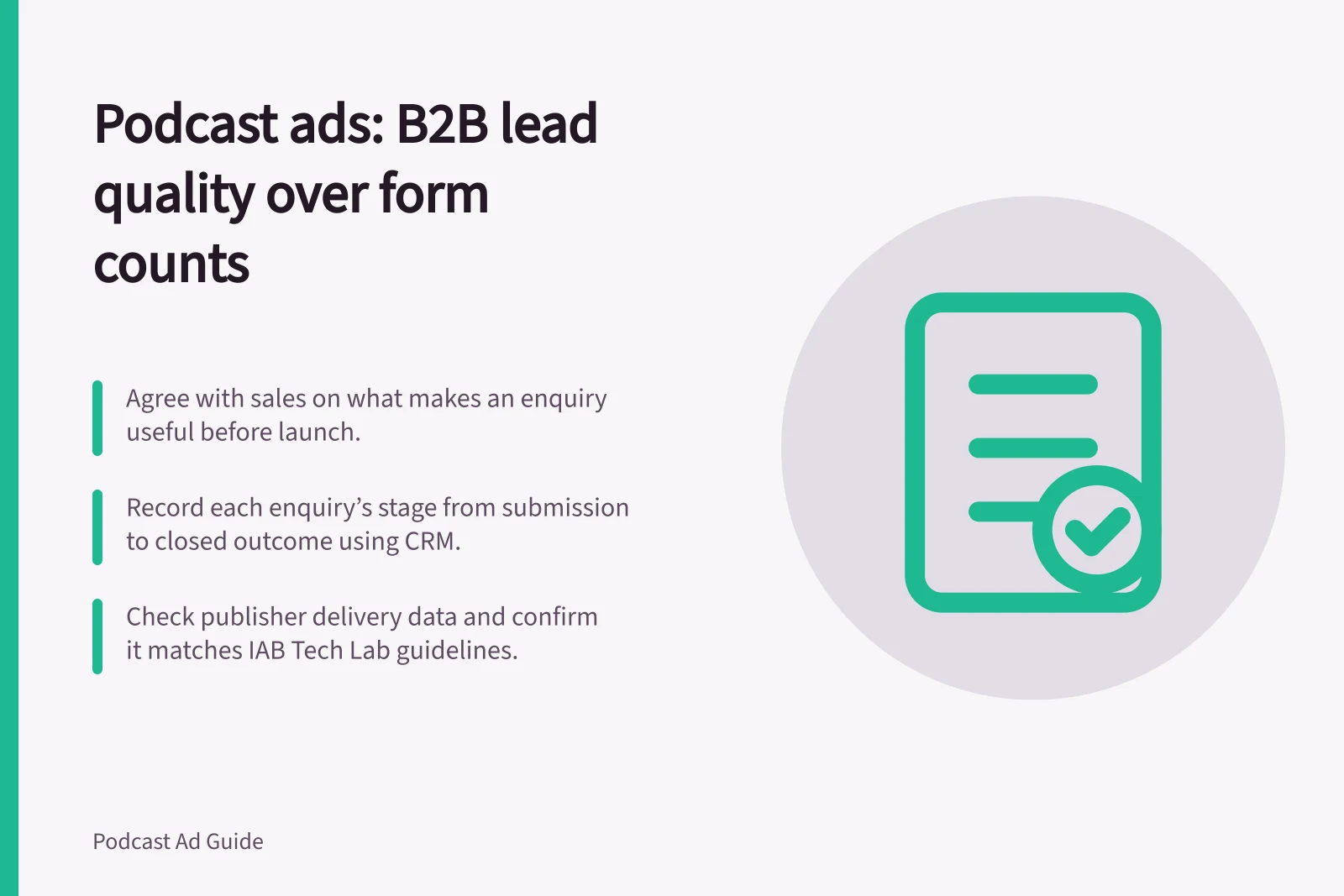
Judge a B2B podcast campaign by whether relevant enquiries are handled and progress, not by form submissions alone. Agree with sales what makes an enquiry useful, record its movement through the sales process and allow for the organisation's buying timetable. Check publisher delivery separately.
Define a useful enquiry
Specify the organisations the supplier can serve, the problem it addresses and the role likely to investigate it. Agree a small set of qualification criteria with sales before launch. Location, business type or project need may matter, depending on the actual offer. A generic lead score cannot replace that decision.
A request for a resource and a request for a conversation express different intentions. Neither should automatically become a sales opportunity. Set a handoff: who reviews the enquiry, what status they record and how the team follows up. Review rejected enquiries too, since an unsuitable request and an unanswered suitable request point to different problems.
Offer a next step a buyer can use
The audio should name a relevant business problem and one supportable way the supplier addresses it. A guide, specification or consultation may help the person investigate and explain the option internally. Choose the route that answers the question raised by the ad.
For a hypothetical facilities-management service, the ad might invite an operations manager to review the supplier's assessment process. This says nothing about a real provider or a show's audience. Do not promise a saving, certification or immediate result without evidence and necessary qualifications. The ACCC can require businesses to back up claims they make about their products or services.
If the ad promises a guide, the destination should provide it on the stated terms. If it promises a consultation, explain what the prospect is requesting. Collect contact details appropriate to responding and have the actual form and data use reviewed for applicable privacy requirements. The Australian Privacy Principles' collection rules apply to APP entities; this article does not determine an advertiser's status.
Keep a lead-stage record
A workable sequence is submitted enquiry → reviewed enquiry → sales-accepted enquiry → opportunity → closed outcome. Record dates and reasons for acceptance or rejection. Define how duplicates, existing customers and out-of-area requests are counted. Keep those definitions steady through the review.
Report volume and quality together. If few submissions arrive, inspect the spoken promise, response route and follow-up as well as audience fit. If submissions arrive but sales rejects many, inspect the qualification definition and what the ad invited. These patterns suggest questions; they do not identify a cause on their own.
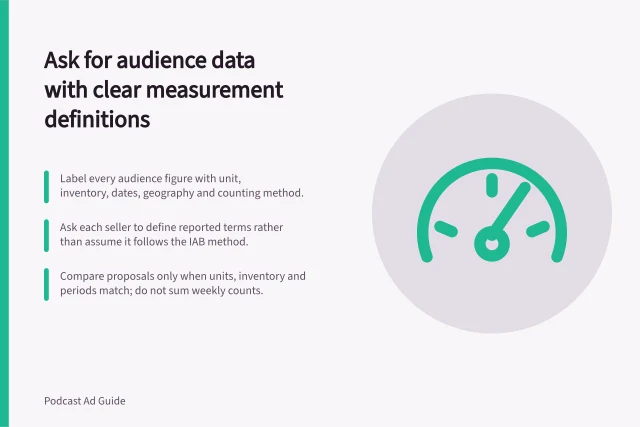
Ask the publisher what its delivery figure counts and whether its Australian inventory report covers the buy. The IAB Tech Lab guidelines address measurement of downloaded media and the ads included in those downloads. Confirm the actual seller's method. CRM progression shows recorded sales activity; it does not prove which enquiries or contracts the podcast caused.
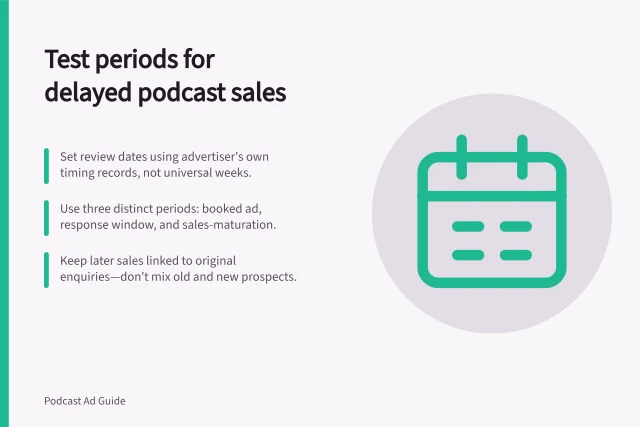
Set an early review once enquiries have been handled and a later one when the relevant group has had time to progress. Use the advertiser's historical stage timing where available. Label open opportunities as pending. If an incremental-effect claim is needed for the spending decision, plan a suitable comparison rather than treating a rise in enquiries during the campaign as proof.
Key Measurement Points for B2B Podcast Advertising
- Enquiries submitted
- Total number of responses from ad
- Sales-accepted enquiries
- Number meeting pre-agreed criteria
- Opportunities created
- In CRM with active follow-up
- Closed outcomes
- Won, lost, or deferred (with reason)