Buying Inventory
Part of Podcast advertising for Australian brands
Matching podcast campaign objectives to the buying journey
Choose a podcast message, listener action and evaluation measure for recognition, consideration or purchase without overstating attribution.
Set the campaign objective against the next decision a potential customer can reasonably make after hearing the ad. A first-time listener needs a different message and next step from someone ready to enquire or buy. Decide the objective before writing the call to action or judging the response.
Identify the decision the listener faces
Start with the product and the likely point of uncertainty. Do people need to recognise the brand, understand what it does, compare options or check whether an offer suits them? The buying journey is a planning model, not a way to know the stage of an individual podcast listener. The same episode can reach people at several stages.
Give each creative one primary job. An ad that introduces an unfamiliar service, lists detailed terms and demands an immediate purchase can leave little room for any idea to register. If several jobs matter, plan distinct messages and give each a clear purpose.
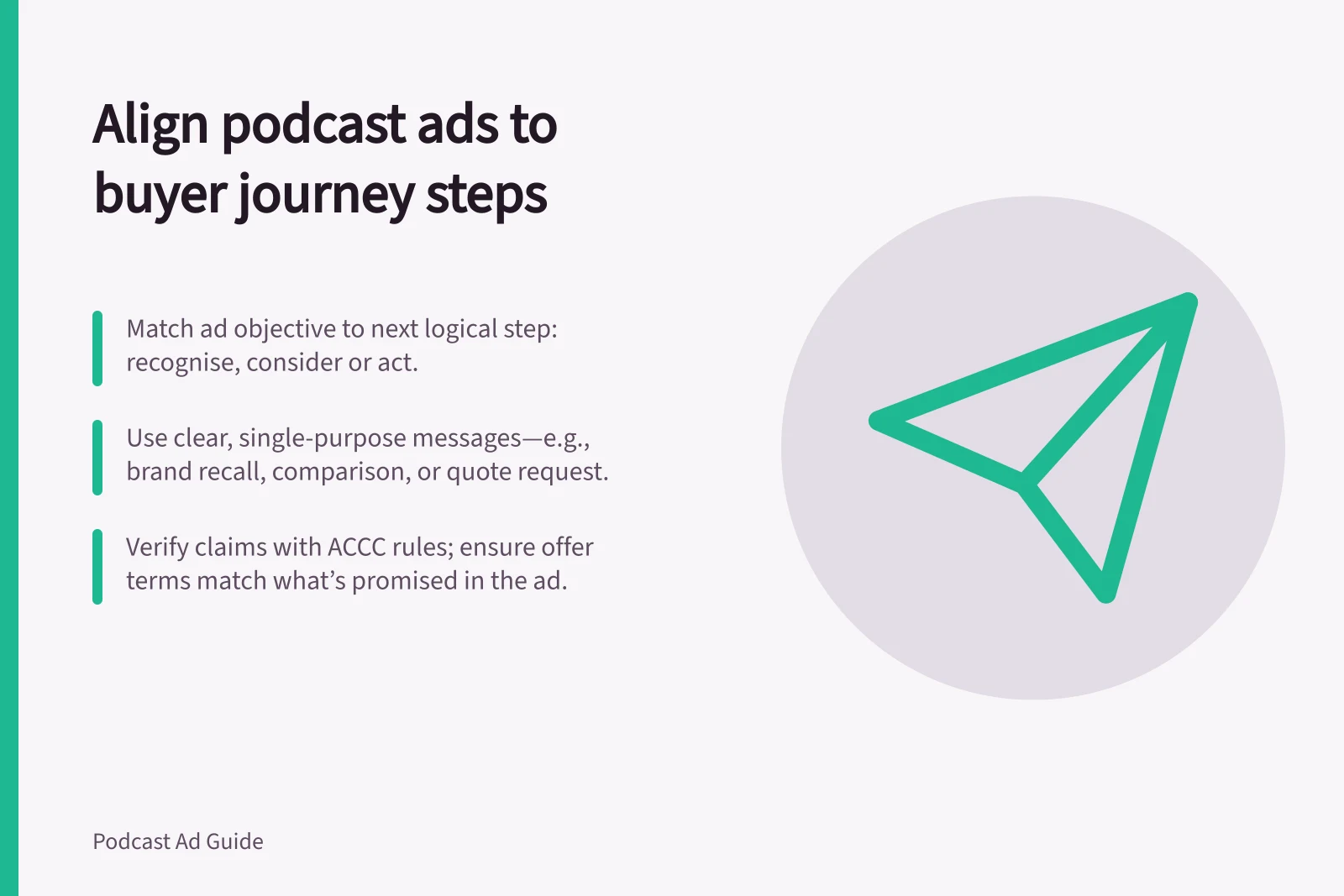
| Primary objective | Useful audio task | Reasonable next step | Evidence to examine |
|---|---|---|---|
| Recognition | Make the brand name and its role easy to understand. | Remember the name or explore a simple destination. | Delivery and a suitable recognition or recall study, if feasible. |
| Consideration | Answer one important question or explain a relevant difference. | Read details, compare options or enquire. | Relevant page activity or qualified enquiries, defined before launch. |
| Action | State a specific offer and an important condition. | Order, book or request a quote. | Accepted orders, bookings or leads in the advertiser's records. |
Treat these as suggested matches, not guaranteed outcomes. State the observation window and each measure's limits. A page address or code can be shared, and an order can follow several marketing contacts.
Let the offer determine how much the ad asks
For a considered purchase, a short audio message can make the brand relevant and invite a manageable next step, such as a comparison or consultation. It need not carry the entire sales argument. A direct action may suit a straightforward offer if its benefit and essential conditions can be understood on one hearing.
Consider a hypothetical home-office chair retailer. An introductory ad might explain the range and a memorable place to explore it. Another might answer one selection question and invite a product comparison.
A purchase-focused version might explain a real, approved offer and its terms. These are possible messages, not a tested sequence or a prediction of sales.
Check the destination against the recording. If the ad promises a comparison, the page should provide one. If it promises a discount, make qualifying terms clear before the customer acts. The ACCC can require businesses to back up claims they make about their products or services, and it can investigate misleading conduct.
Choose a measure that answers the objective
For recognition, a suitable survey can ask whether people remember the brand or message, but its sample, comparison method and uncertainty matter. For consideration, define what makes a visit or enquiry useful. For action, reconcile recorded orders or leads with the advertiser's system. Do not change the primary objective after seeing the results.
Ask the seller what its delivery report counts. In open podcast distribution, a valid download or server-recorded ad delivery does not confirm that a person played the ad. Delivery describes the opportunity under a stated method; the advertiser's records show observed actions. Neither measure alone proves what the podcast caused.
Set campaign dates and a response window suited to the decision being asked for. If a purchase normally takes time to evaluate, an immediate-order report gives an incomplete view. Record the objective, creative, next step and measure together so the review can identify a weak message, response path or measurement setup.
Key performance indicators by campaign objective
- Consideration
- Qualified enquiries or page visits (defined pre-launch)
- Action
- Accepted orders or bookings tracked in advertiser system