Buying Inventory
Part of Podcast ad placement and format
Pre-roll, mid-roll and post-roll placements compared
Pre-roll, mid-roll and post-roll describe when an ad appears relative to the episode.
Pre-roll, mid-roll and post-roll describe when an ad appears relative to the episode. They do not by themselves specify the ad's length, creative voice, number of other ads or guaranteed audience. Compare those terms before deciding that one position is worth more.
What each position changes
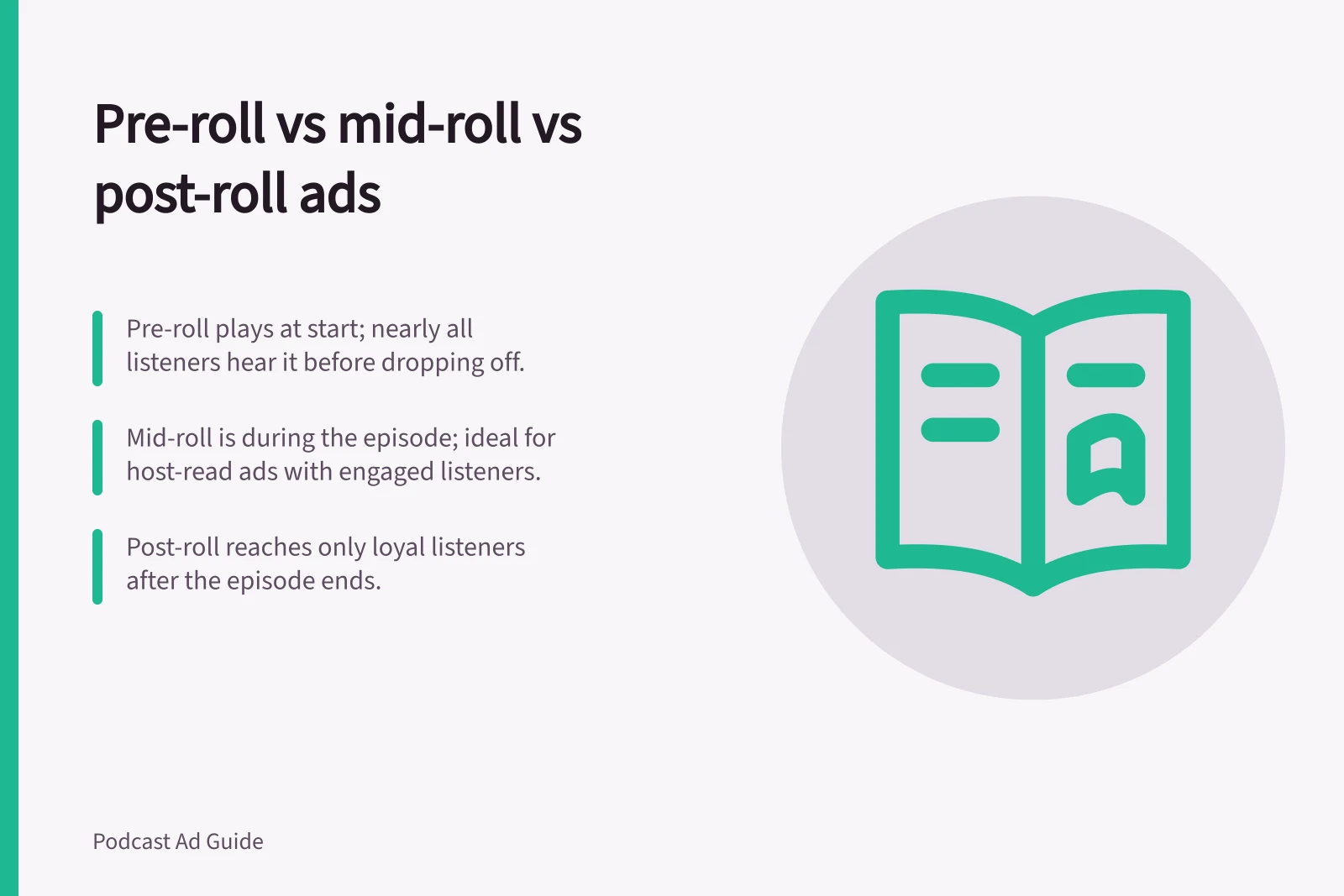
Pre-roll appears at or near the start, so nearly everyone who presses play may hear it before listeners drop off. Attention is still warming up. That makes it a fit for a short, punchy brand message.
Mid-roll appears during the episode, when listeners who have reached it are engaged and less likely to skip. It is often treated as the premium slot and can suit a main offer or a host-read ad.
Post-roll follows the episode and has the smallest reach because some listeners leave before the end. Those who stay are often the show's most loyal listeners. It suits a secondary call to action or a reminder that does not rely on immediate attention.
Ask the publisher where the ad break sits in a typical episode, how many messages share it and whether the ad can move between positions. If the show has long episodes, “mid-roll” can still cover quite different listening moments. Obtain a sample episode rather than relying on the label alone.
Run a fair comparison
Keep creative, target show and flight as consistent as possible when comparing positions. Report delivery on the seller's stated measurement basis, and use the same downstream outcome window. A pre-roll may appear in more downloaded episodes while a later break may have a different listening pattern; delivery logs alone do not settle which was heard.
Choose based on message complexity, context and the price difference. If the evidence is thin, test a limited split and decide after reviewing both delivery and relevant actions. Avoid declaring a winner from one small campaign or a metric that describes only downloads.